Mosman Tallowwood Re-Decking
Mosman, NSW
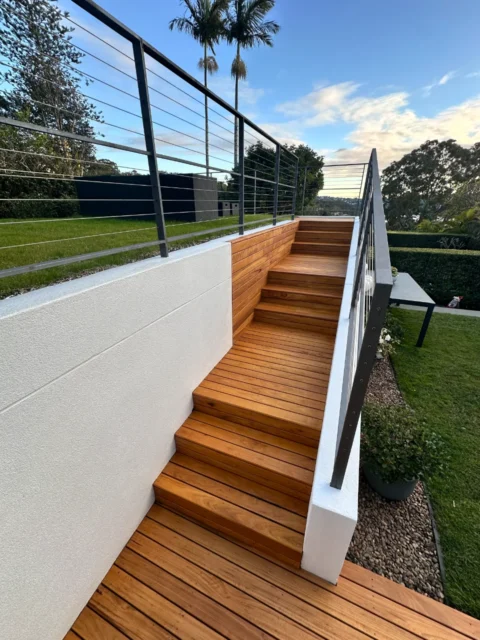

Sanding is the most critical step in preparing your timber for a long-lasting finish. We safely remove old stains, deep scratches, and grey oxidation, returning your hardwood to its raw, natural state without damaging the boards.
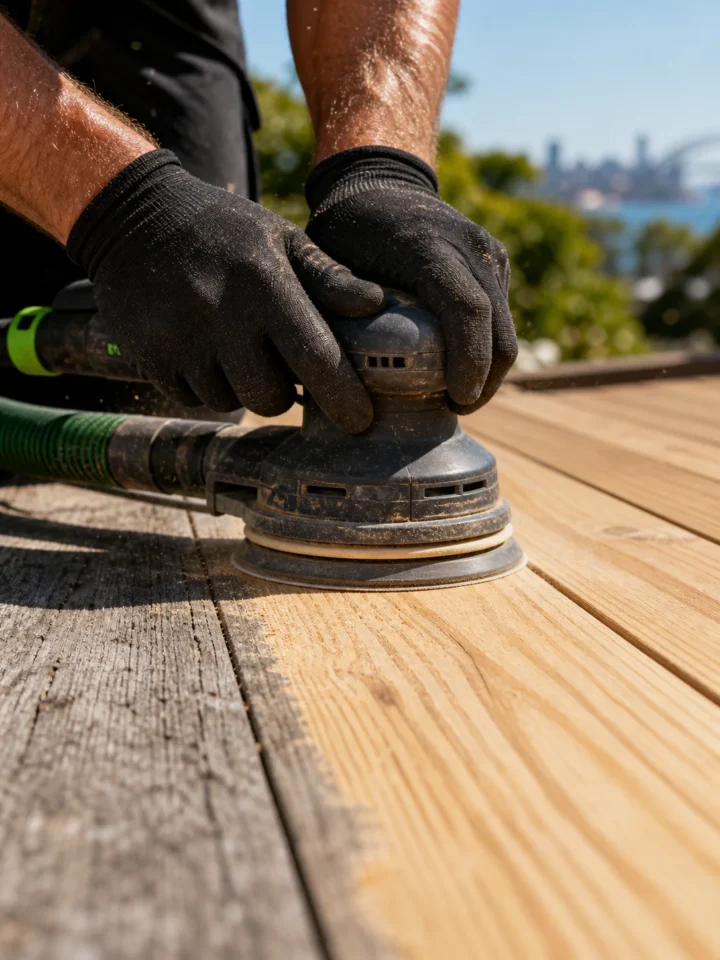
We often get asked to simply sand a deck so the homeowner can apply the oil themselves. While we understand the DIY approach, proper timber care is an integrated system. Leaving freshly sanded hardwood exposed — even for a few days in the Sydney weather — makes it vulnerable to moisture, UV damage, and rapid greying.
To ensure the timber is truly protected, sanding must be immediately followed by the right nourishing finish. That’s why we focus on complete restoration, ensuring the job is done properly from start to finish.
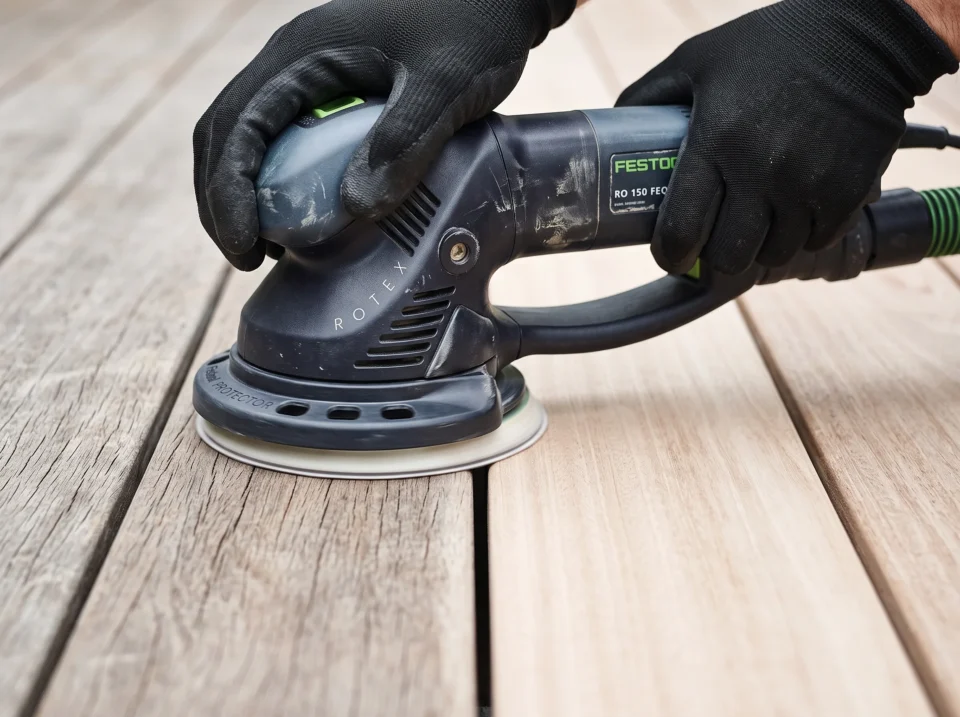
Proper sanding is about much more than just running a machine over the boards. It requires careful preparation, the right equipment for different areas of the deck, and a multi-stage approach to ensure the timber isn't damaged. Here is exactly how we prepare your deck.
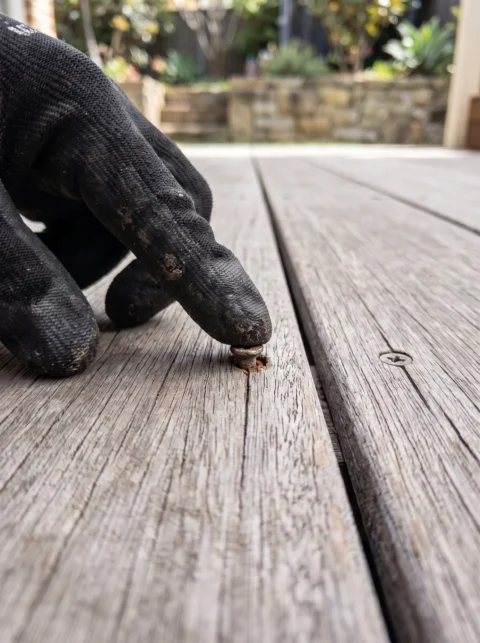
Before any sanding begins, we inspect the deck surface and identify any loose or raised fixings that may affect the preparation process or create a trip hazard. Where practical, isolated loose screws are tightened or replaced. Because our restoration process does not rely on aggressive drum or belt sanding, existing round-head nails do not need to be routinely punched below the timber surface. This allows us to prepare the boards carefully without unnecessarily damaging the fixings or removing excessive timber.
Once the surface is prepared, we use a multi-stage sanding process tailored to the condition of the timber. Rather than relying on aggressive drum or belt sanders that can remove excessive material, we combine controlled surface sanding, detailed edge and hard-to-reach preparation, and professional nylon brush sanding. This allows us to remove weathered fibres, old coating residue and surface contamination while following the natural profile of the boards and preserving as much sound timber as possible.
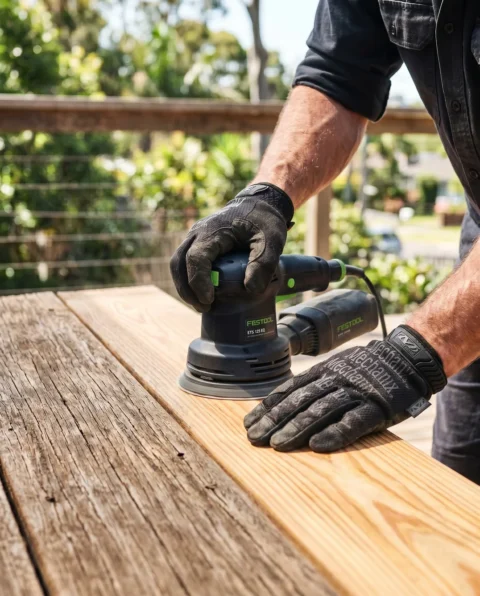
Heavy sanding leaves the timber clean but often slightly rough. The final step is a fine-grit buffing process. This smooths out any minor sanding marks and gently opens the timber’s grain. Proper grain preparation is crucial—it allows the penetrating oil we apply next to soak deep into the wood rather than just sitting on the surface.
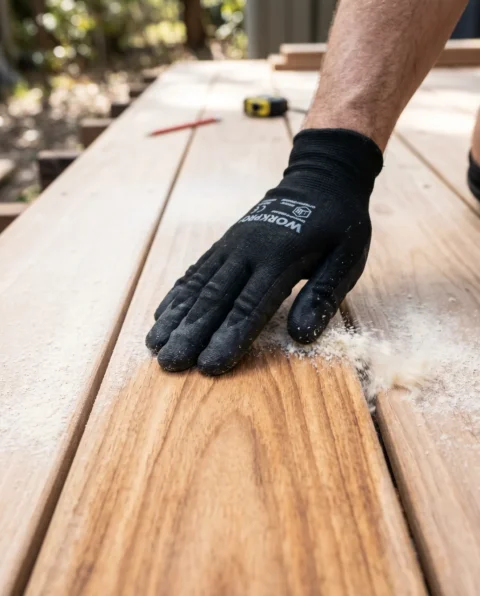
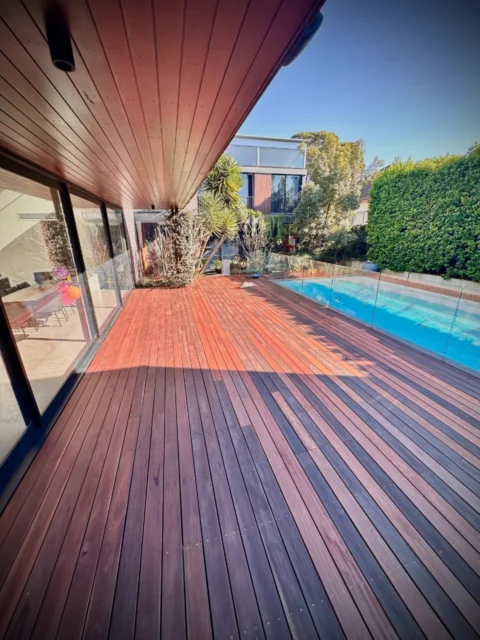
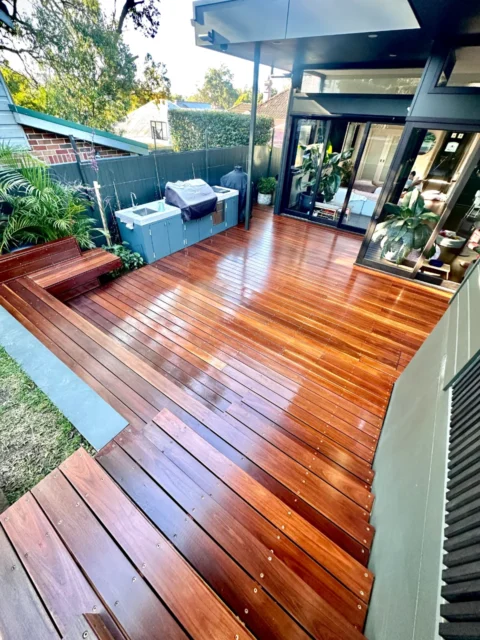
Whether it’s Merbau, Spotted Gum, or Treated Pine, every timber requires a specific sanding approach. Explore how we’ve prepared and restored different decks across the Northern Beaches and North Shore.
Sanding can be an intrusive and dusty process if not handled correctly. Below are the answers to the most common questions we receive about preparing timber decks in Sydney. If you have a specific concern about your deck's condition, feel free to reach out.
It depends on the current coating and the condition of the wood. If your deck only has minor dirt build-up and was previously treated with a true penetrating oil, a deep chemical wash might be enough. However, if the timber has turned completely grey, is heavily stained, or has a peeling varnish, sanding is mandatory. Painting over peeling acrylics or deep oxidation will guarantee the new finish fails within months.
Yes. Unlike traditional drum or belt sanding, our preparation process uses nylon brush sanding, which allows us to work around existing nails and screws without grinding into the fixings or causing unnecessary damage.
If there are one or two raised or loose screws that may be uncomfortable or unsafe underfoot, we will tighten or adjust them where practical. On decks with round-head nails sitting naturally on the surface of the timber, we do not routinely punch every nail below the boards simply for sanding.
Our system is designed to prepare the timber without relying on aggressive machinery that can damage the fixings or remove excessive material.
We use professional-grade sanding equipment with dust extraction wherever possible. While it is impossible to eliminate 100% of dust in an open outdoor environment, the extraction systems capture the majority of it. Any remaining fine dust is then vacuumed or blown away so the surface is clean and ready for the next stage of finishing.
Grooved decking is extremely difficult to sand with traditional machines because the sander only hits the top ridges, leaving the grooves untouched. In most cases, we recommend a heavy-duty chemical stripping and high-pressure washing system for grooved boards instead of mechanical sanding, to ensure the entire profile is cleaned without flattening the wood.
Immediately. Raw, freshly sanded hardwood is highly porous and vulnerable. If exposed to the Sydney sun or a sudden rain shower without protection, it can suffer UV damage, water staining, or even start warping. That is why our process always includes immediate application of a premium penetrating oil (like Cutek) as soon as the final fine-sanding is complete.
Whether it’s a quick repair, full restoration or a brand-new build, just send us a few details below. We’ll get back to you with honest advice, clear next steps and a transparent quote.
Better yet, see us in person No spam, no obligations — just honest advice.