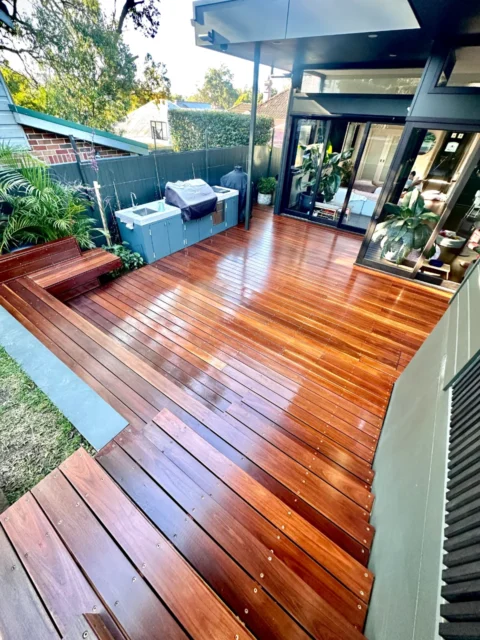
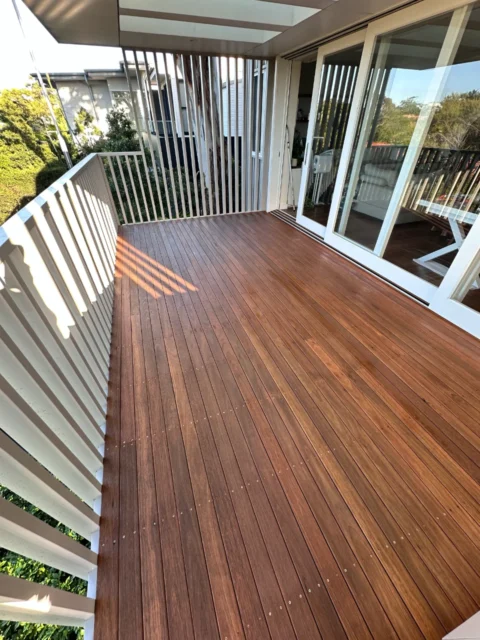
Naremburn Spotted Gum Colour Restoration
Naremburn, NSW

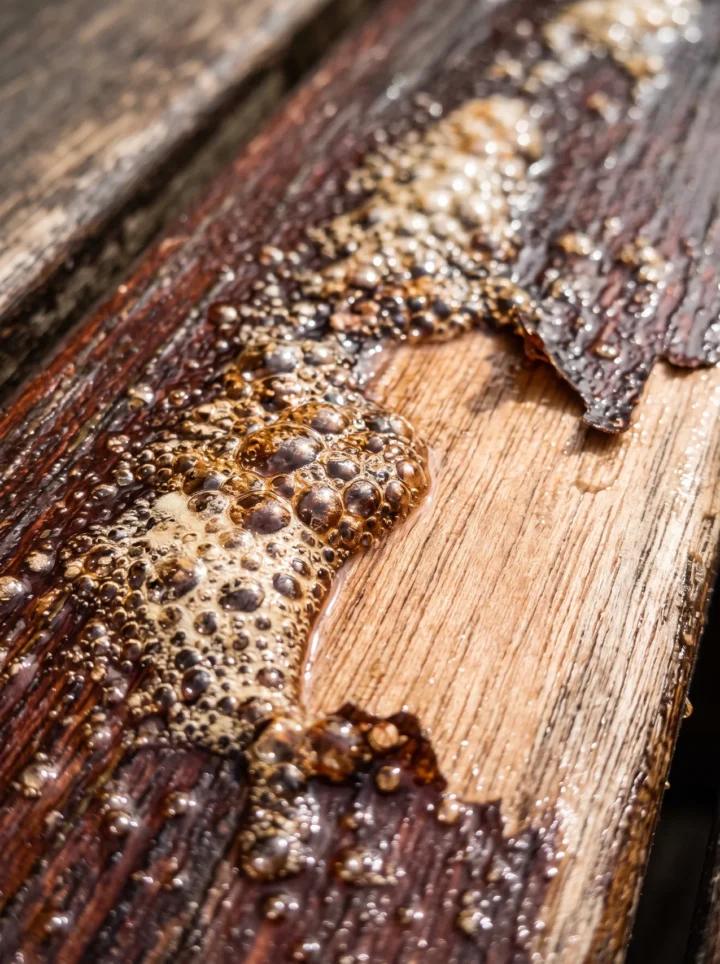
Removing failing, peeling deck coatings requires professional chemistry. We safely dissolve old varnishes, stubborn acrylics, and dark tints, lifting the trapped finish from the timber grain and between the boards without aggressively grinding away the wood.
We often get asked to simply strip a peeling deck so the homeowner can recoat it themselves. However, chemical stripping is an intense process that leaves the timber’s PH balance highly altered and the wood fibres completely raw and vulnerable to moisture.
To ensure the timber is structurally safe and truly protected, the stripping phase must be immediately followed by a neutralising wash, controlled sanding, and the right nourishing finish. That’s why we focus on complete restoration, ensuring the job is done properly from start to finish.
Proper deck stripping is about applied chemistry, not brute force. It requires selecting the right active agents for specific old coatings, managing chemical runoff, and a multi-stage approach to ensure the timber isn't damaged. Here is exactly how we strip your deck.
You can’t simply apply generic paint stripper to a deck. Before we begin, we identify the exact type of failing finish—whether it’s a water-based acrylic or a heavy oil-based varnish. We then meticulously mask off surrounding walls, glass, and vegetation to ensure the active stripping chemicals only interact with the decking boards.
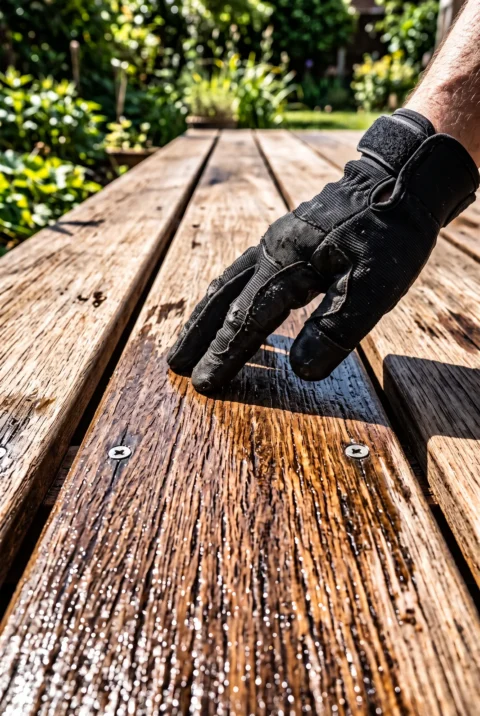
Once the site is protected, we apply a thick layer of professional-grade stripping gel. This chemical needs time to actively blister and dissolve the old coating. For stubborn areas, we manually agitate the surface with stiff brushes, working the stripper deep into the timber grain, down the vertical edges, and between the board gaps where machines can't reach.
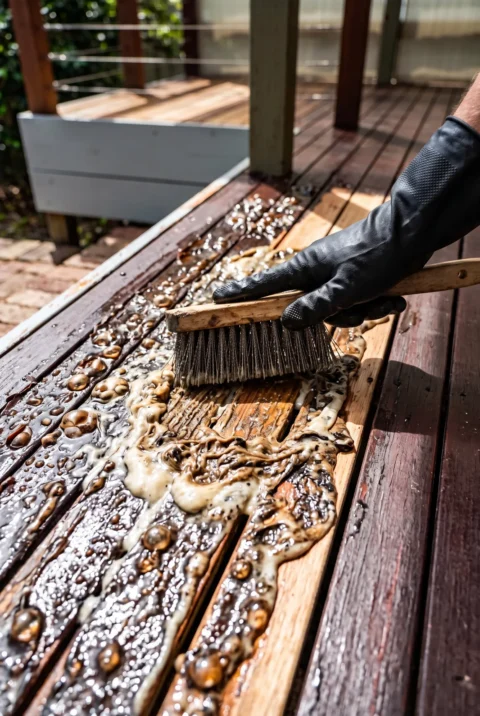
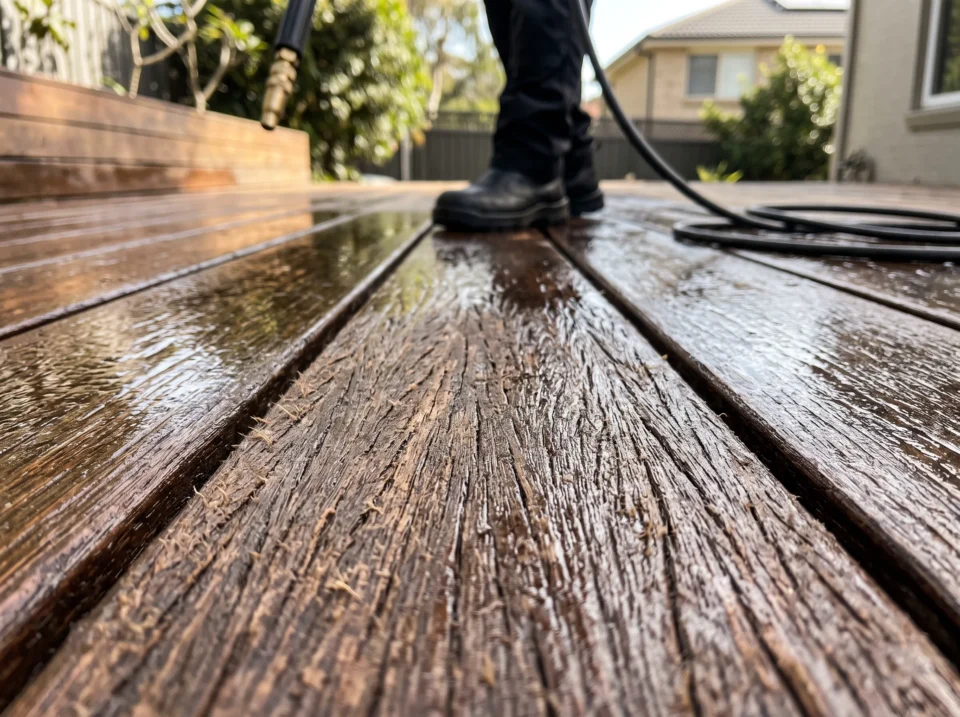
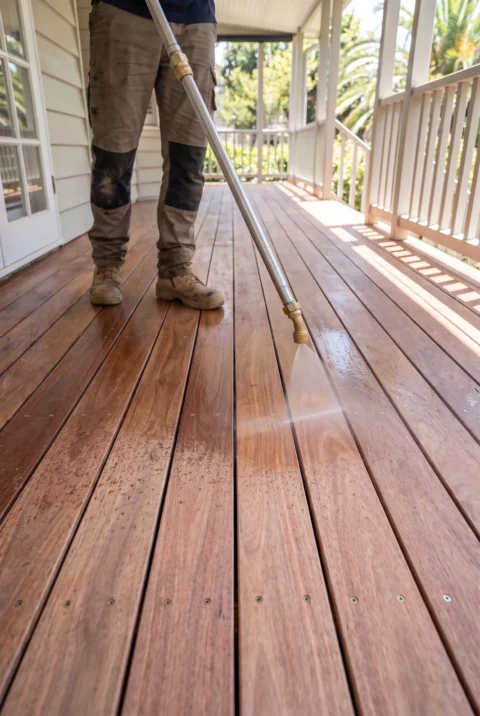
After the old coating has completely broken down, we use controlled, high-volume water extraction to wash away the dissolved sludge. Because stripping chemicals are highly alkaline, the final and most crucial step is applying an acidic neutralising wash. This restores the timber’s natural pH balance and prepares the wood for the sanding phase.
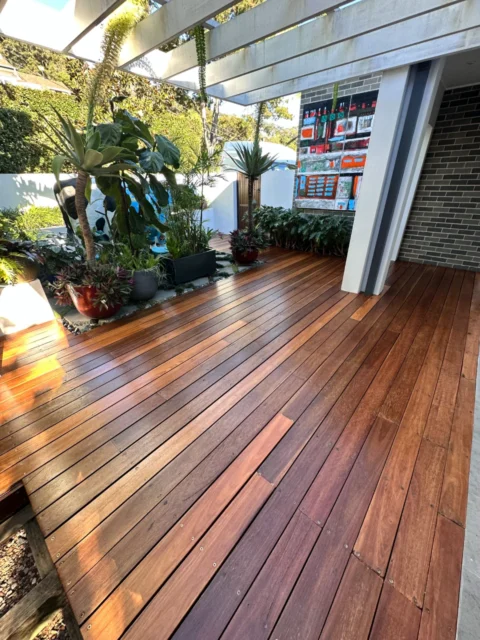
Whether it’s removing a dark tint from Spotted Gum or stripping peeling acrylic from Treated Pine, every old coating requires a specific removal approach. Explore how we’ve prepared and restored heavily weathered decks across the Northern Beaches and North Shore.
Stripping old finish can be a messy and complex process if not handled correctly. Below are the answers to the most common questions we receive about removing deck coatings in Sydney. If you have a specific concern about your deck's condition, feel free to reach out.
Sanding a thick, peeling varnish without stripping it first is a major mistake. The heat from the sander melts the old acrylic, instantly clogging the sandpaper and smearing melted plastic deep into the timber grain. Chemical stripping removes the bulk of the coating safely, allowing the subsequent sanding phase to be gentle and precise.
Yes. If you want to return a deck that was previously coated in a dark stain back to its natural, lighter hardwood look, chemical stripping is the only effective way to lift the dark pigment out of the deep grain before sanding.
Absolutely. This is one of the main advantages of chemical stripping over mechanical sanding. The stripping gel flows down between the boards and onto the vertical edges (like stair risers), dissolving old, trapped finish in areas that a flat drum sander simply cannot reach.
We take site protection very seriously. We heavily saturate all surrounding grass and garden beds with fresh water before, during, and after the stripping process. This dilutes any chemical runoff to safe levels, ensuring your landscaping remains completely unharmed.
Whether it’s a quick repair, full restoration or a brand-new build, just send us a few details below. We’ll get back to you with honest advice, clear next steps and a transparent quote.
Better yet, see us in person No spam, no obligations — just honest advice.